




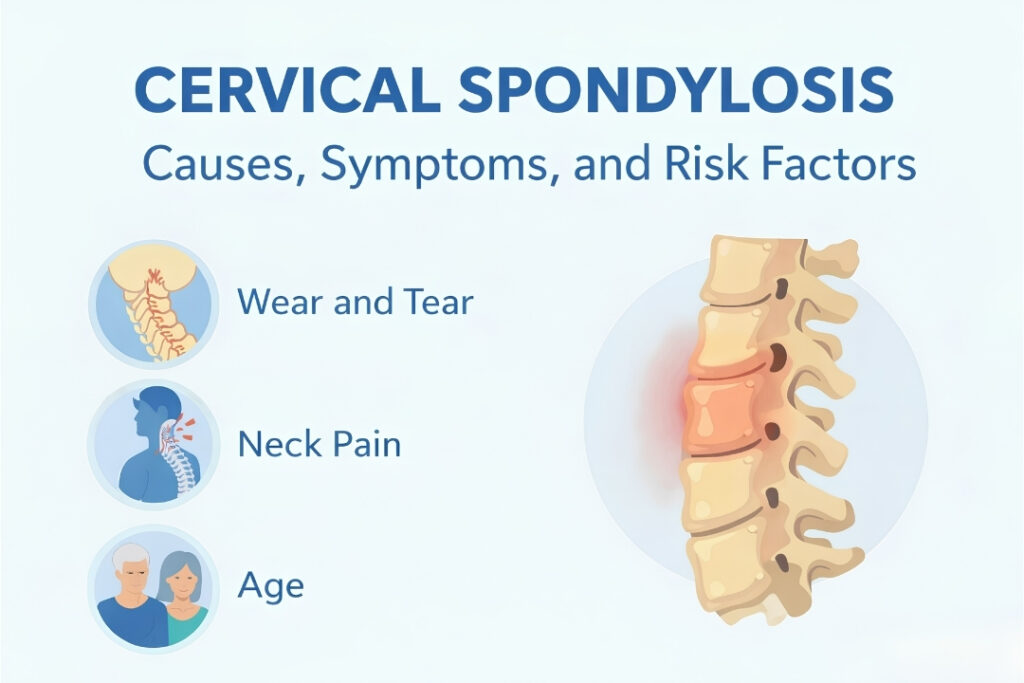
Cervical Spondylosis — Why Neck Pain Should Never Be Ignored
Introduction
Neck pain is a common complaint among people of all ages, especially those who spend long hours using computers, mobile phones, or sitting in poor posture. While occasional neck discomfort may not be serious, persistent pain should never be ignored. One of the most common causes of chronic neck pain is cervical spondylosis. This condition develops gradually and can affect daily activities, sleep quality, and overall well-being. In some cases, it may even lead to nerve compression and neurological symptoms. Understanding cervical spondylosis and recognizing its warning signs can help individuals seek timely treatment and prevent complications.
What Is Cervical Spondylosis?
Cervical spondylosis is an age-related condition that affects the bones, discs, and joints of the neck (cervical spine). It is often referred to as neck arthritis because it involves wear and tear of the spinal structures over time.
The cervical spine consists of seven vertebrae that support the head and allow neck movement. As people age, the discs between these vertebrae gradually lose moisture and flexibility. This can cause degeneration, bone spurs, and stiffness.
Although cervical spondylosis becomes more common with age, younger individuals can also develop the condition due to poor posture, repetitive neck strain, or prolonged screen use.
Many people with cervical spondylosis experience mild symptoms, while others may develop significant pain and nerve-related problems.
For example, an office worker in Faisalabad who spends several hours daily looking down at a laptop or mobile phone may gradually develop neck stiffness, pain, and headaches associated with cervical spondylosis.
Early diagnosis helps reduce discomfort and prevents worsening symptoms.

Causes & Risk Factors of Cervical Spondylosis
Several factors contribute to the development of cervical spondylosis.
Common causes include:
- Natural aging and spinal degeneration
- Repetitive neck movements
- Poor posture
- Long hours of desk work
- Frequent mobile phone use
- Previous neck injuries
- Heavy lifting
- Lack of physical activity
Certain risk factors increase the likelihood of developing the condition:
- Age above 40 years
- Family history of spinal disorders
- Obesity
- Smoking
- Occupations requiring repetitive neck movements
- Sedentary lifestyle
Modern lifestyles have increased the prevalence of cervical spondylosis. Many individuals spend hours looking down at smartphones, a habit often called “text neck,” which places extra stress on the cervical spine.
Over time, these factors can accelerate wear and tear and contribute to chronic neck problems.
When Should You See a Doctor?
While mild neck pain may improve with rest, certain symptoms require medical evaluation.
You should consult a doctor if:
- Neck pain persists for several weeks
- Pain frequently returns
- Symptoms interfere with daily activities
- Pain spreads into the shoulders or arms
- Numbness or tingling develops
- Arm weakness occurs
- Headaches become frequent
- Balance problems appear
Immediate medical attention may be necessary if neck pain is accompanied by significant weakness, difficulty walking, or loss of coordination.
A neurologist can assess symptoms, perform a neurological examination, and determine whether nerve involvement is present.
Consulting Dr. Zaheer Ahmed at Majeed Neuro Clinic can help identify the underlying cause and guide appropriate treatment.

Signs & Symptoms of Cervical Spondylosis
The symptoms of cervical spondylosis vary depending on the severity of spinal degeneration and whether nerves are affected.
Common symptoms include:
- Neck pain
- Neck stiffness
- Reduced range of neck movement
- Headaches originating from the neck
- Shoulder pain
- Upper back discomfort
- Muscle tightness
When nerves become compressed, additional symptoms may occur:
- Pain radiating into the arms
- Numbness in the hands or fingers
- Tingling sensations
- Weakness in the arms
- Difficulty gripping objects
In more advanced cases, spinal cord compression may cause:
- Difficulty walking
- Poor balance
- Loss of coordination
- Weakness in the legs
Many patients notice symptoms worsening after long periods of sitting, driving, or computer use.
Ignoring persistent symptoms can allow the condition to progress and affect quality of life.
Treatment & Management of Cervical Spondylosis
Treatment for cervical spondylosis focuses on relieving pain, improving mobility, and preventing further complications.
Lifestyle Modifications
Many patients benefit from:
- Improving posture
- Taking regular movement breaks
- Adjusting workstation ergonomics
- Avoiding prolonged neck strain
Physical Therapy
Physical therapy may help:
- Strengthen neck muscles
- Improve flexibility
- Enhance posture
- Reduce stiffness
Managing Neurological Symptoms
When nerves are affected, a neurologist may recommend additional evaluation and management strategies.
Regular Medical Monitoring
Patients with persistent symptoms should have regular follow-up appointments to monitor progression and response to treatment.
Early intervention often provides better outcomes and helps maintain normal daily activities.
Patients should avoid self-diagnosing neck pain because symptoms may sometimes indicate other neurological conditions.

Prevention Tips for Cervical Spondylosis
Although aging cannot be prevented, certain habits can reduce the risk of cervical spondylosis and minimize symptom severity.
Helpful prevention tips include:
- Maintain proper posture
- Keep screens at eye level
- Avoid prolonged mobile phone use
- Exercise regularly
- Strengthen neck and shoulder muscles
- Maintain a healthy weight
- Take breaks during desk work
- Use ergonomic furniture
- Avoid smoking
- Stay physically active
Simple posture improvements can significantly reduce stress on the cervical spine and support long-term neck health.
Preventive measures are especially important for individuals who spend many hours working on computers or mobile devices.
Frequently Asked Questions (FAQs)
1. Is cervical spondylosis a normal part of aging?
Age-related changes in the cervical spine are common, but not everyone develops symptoms. Proper care can help reduce discomfort and maintain mobility.
2. Can cervical spondylosis cause headaches?
Yes. Neck degeneration and muscle tension can contribute to headaches that often begin at the back of the head and neck.
3. When should neck pain be considered serious?
Neck pain should be evaluated if it persists, worsens, spreads to the arms, or is associated with numbness, weakness, or balance problems.

Conclusion:
Cervical spondylosis is a common condition that can cause chronic neck pain, stiffness, headaches, and nerve-related symptoms. While many people dismiss neck pain as a minor problem, persistent symptoms should never be ignored. Early diagnosis and proper management can help reduce discomfort, improve mobility, and prevent complications. If you are experiencing ongoing neck pain or neurological symptoms, seeking professional evaluation is an important step toward better health.
- Tags:
- Cervical Pain Pakistan
- Cervical Spondylosis
- Cervical Spondylosis neck pain treatment Pakistan
- Cervical Spondylosis Pakistan
- Cervical Symptoms
- Dr Zaheer Ahmed
- Gardan Dard Ka Ilaj
- Gardan Ka Dard
- General Medical Health
- Majeed Neuro Clinic
- Neck Pain
- Neck Pain Causes
- Neck Pain Doctor Faisalabad
- Neck Pain Treatment Faisalabad
- Neuro Physician Faisalabad
- Spine Disorders Pakistan